
ROTC Performance Review Board Defense. The Hearing That Decides It.
A Performance Review Board evaluates whether a midshipman or cadet is retained, placed on probation, or disenrolled from the ROTC or NROTC program. In Navy ROTC, the PRB is the disenrollment hearing itself; there is no separate subsequent board. Scholarship recoupment follows disenrollment as a federal debt. The military does not provide counsel for a PRB. You can bring your own. Matthew represents midshipmen and cadets at PRBs nationwide.
Free 15-min CallFree 15-min call, no charge, confidential.
Overview
ROTC Performance Review Board Defense
A Performance Review Board (PRB) is a formal ROTC or NROTC proceeding that evaluates whether a midshipman or cadet should continue in the program. In the Navy ROTC system specifically, the PRB functions as the disenrollment hearing. There is no separate subsequent board. Every PRB in that system carries disenrollment-level stakes. Army ROTC and Air Force/Space Force ROTC handle disenrollment through their own boards under their own regulations, with their own procedural rules.
The PRB is the central proceeding in the disenrollment process. A board of officers reviews the evidence, hears testimony, and makes a recommendation on whether to retain the cadet, impose conditions like probation, or recommend disenrollment, with potential scholarship recoupment. The board has real discretion, and the outcome is not predetermined. How the case is presented can shape the result. But many cadets walk into that room without representation, preparation, or a clear understanding of the stakes.
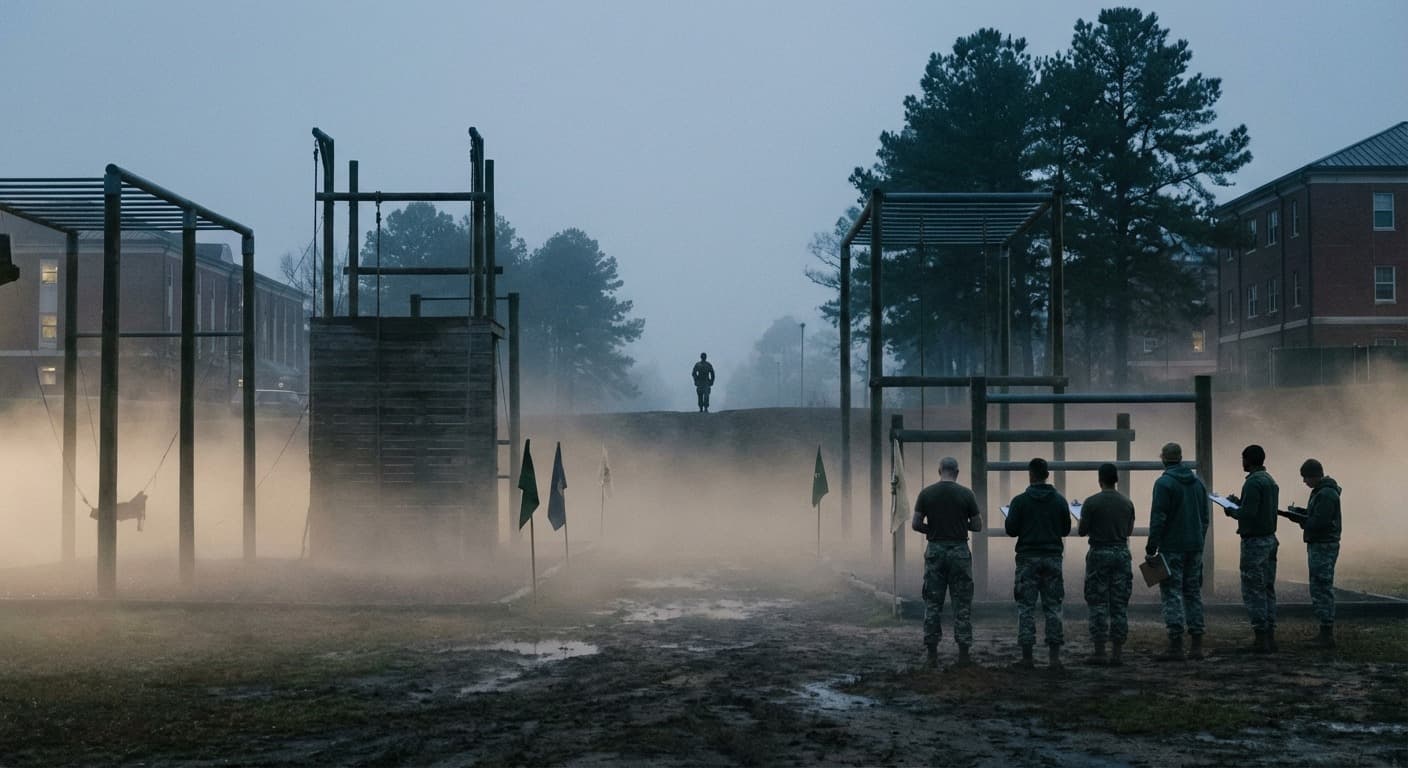
“In Navy ROTC, the PRB is the disenrollment hearing. There is no second chance. You prepare for that room or you lose it.”
A range of issues can trigger a PRB: academic failure or GPA deficiency; leadership and professionalism concerns; conduct and disciplinary incidents; physical fitness failures (PRT or PFT); questions about officer potential; honor code violations; medical issues affecting program participation. The stated basis shapes the defense. A PRB convened for academic performance is a different case than a PRB convened for a conduct incident, and the evidentiary strategy has to match.
The consequences of disenrollment do not end with leaving the program. For scholarship recipients, disenrollment triggers scholarship recoupment, enforced as a federal debt. For a full 4-year scholarship at a private university running $30,000 to $60,000 per year in tuition plus years of monthly stipend payments, the recoupment figure can exceed $100,000. Interest accrues. Collection action follows. A federal debt of that size can follow a 22-year-old through their most financially consequential decade. In some cases, the consequence is an enlistment obligation rather than, or in addition to, monetary recoupment. The program office does not always explain the full range of consequences up front.

Recoupment waivers are often a separate track. Even if disenrollment proceeds, scholarship repayment is not automatic, and waivers or remission may be available based on hardship, circumstances beyond the cadet's control, and other equitable factors. Because the decision to disenroll and the decision to recoup can involve different standards and arguments, both should be addressed strategically.
The military does not appoint counsel for ROTC PRBs. Unlike a court-martial or an enlisted administrative separation, the system does not provide a lawyer. Midshipmen and cadets have the right to retain private counsel. Most do not, because most do not know the option is available. Matthew represents midshipmen and cadets at PRBs nationwide: Army ROTC under Cadet Command, Navy and Marine Corps ROTC (NROTC), and Air Force and Space Force ROTC (AFROTC).
Matthew is a former Marine Judge Advocate and Former Active-Duty Defense Counsel. USMC Defense Counsel of the Year, National & Eastern Region (2021). He defended Marines at courts-martial and administrative boards before entering private practice. The skills that work in a contested military board proceeding work in a PRB: reading the regulation, pressing procedural issues, preparing the client to testify, and building a record that survives review.
If you have received a disenrollment notice, your response window is often short and varies by branch and stage of the process. Missing a deadline can waive important rights, including the opportunity to appear before a board. Acting quickly matters. You should understand your options before responding.
$100K+
Potential federal repayment for a full 4-year scholarship disenrollment
10-30
Days to respond before the PRB hearing right can be forfeited
3
Branches with distinct regulations: Army, Navy/Marine Corps, Air Force/Space Force
In Navy ROTC, the PRB is the disenrollment hearing
There is no separate subsequent board. Everything that happens at the PRB is the final adjudicative moment. Preparation for that room is the entire case.
Scholarship recoupment is a federal debt
ROTC scholarship recoupment is enforced as a federal debt. Interest accrues. Collection action follows. For a full 4-year scholarship, the exposure can exceed $100,000 before interest. This is not a soft obligation.
Recoupment waivers are a separate fight
Disenrollment and recoupment are distinct decisions. Even if the PRB results in disenrollment, the scholarship repayment obligation is not automatic. Waivers are available based on financial hardship, circumstances beyond the cadet's control, and other regulatory factors. Matthew pursues both tracks in parallel.
You can retain private counsel. The military will not provide one.
Unlike a court-martial or an enlisted administrative separation, the ROTC system does not appoint counsel for PRBs. Midshipmen and cadets have the right to retain private counsel. Matthew represents cadets at PRBs across all branches, nationwide.
Branch regulations differ
Army ROTC (Cadet Command), Navy and Marine Corps ROTC (NROTC), and Air Force and Space Force ROTC (AFROTC) each have their own disenrollment regulations, timelines, and procedural rules. The defense strategy depends on which branch's regulation applies to your case.
The hearing outcome is not predetermined
PRB panels have discretion: retain, disenroll without recoupment, disenroll with recoupment, probation, leave of absence, or remediation. How the case is presented shapes which option the board selects. Direct testimony preparation, character evidence, and procedural challenges all affect the result.
Parents are often the ones who call first
The financial exposure in an ROTC disenrollment case falls on the entire family. Parents frequently make the first call. Matthew works with the cadet directly as the client while keeping communication clear for the family, consistent with the rules that govern who the client is.
Frequently Asked Questions
Common Questions About ROTC Performance Review Boards
A PRB is a formal ROTC or NROTC proceeding that evaluates whether a midshipman or cadet should be retained, placed on probation, or disenrolled from the program. In the Navy ROTC system, the PRB is the disenrollment hearing itself, with no separate subsequent board. Army and Air Force ROTC handle disenrollment through their own branch-specific boards.
Yes. The military does not appoint counsel for ROTC PRBs, but midshipmen and cadets have the right to retain private counsel. Matthew represents cadets at PRBs nationwide across all branches.
Academic failure or GPA deficiency, leadership or professionalism concerns, conduct and disciplinary incidents, physical fitness failures (PRT or PFT), questions about officer potential, honor code violations, and medical issues affecting program participation. The stated basis shapes the defense.
For a cadet who received a full 4-year scholarship at a private university ($30,000 to $60,000 per year in tuition), plus years of monthly stipend payments, the recoupment figure can exceed $100,000. Recoupment is enforced as a federal debt with interest and collection action.
Sometimes. Waivers are available based on financial hardship, circumstances beyond the cadet's control, and other factors defined in the branch's regulations. Recoupment and disenrollment are separate decisions. Matthew pursues the waiver track in parallel with the disenrollment defense.
Typically 10 to 30 days, depending on the branch and the stated basis. Missing the response deadline can forfeit the right to a PRB hearing. Call before you sign or submit anything.
Yes. Army ROTC (Cadet Command), Navy and Marine Corps ROTC (NROTC), and Air Force and Space Force ROTC (AFROTC) each have their own regulations, timelines, and procedural requirements. Matthew has handled PRB cases across all three branches.
Appeal options are limited and branch-specific. In the Navy ROTC system, where the PRB is the disenrollment hearing itself, the primary post-board work is the recoupment waiver track and any available internal review. Matthew advises on the options within the branch's regulatory framework after the hearing.

Two Ways to Start
Your case deserves focused representation.
Matthew offers a free 15-minute call. You explain the situation. He tells you whether it's a case he handles, what it involves, and what representation costs. No pitch. If your situation needs more depth, the paid strategy consultation goes there.
All other matters · Paid