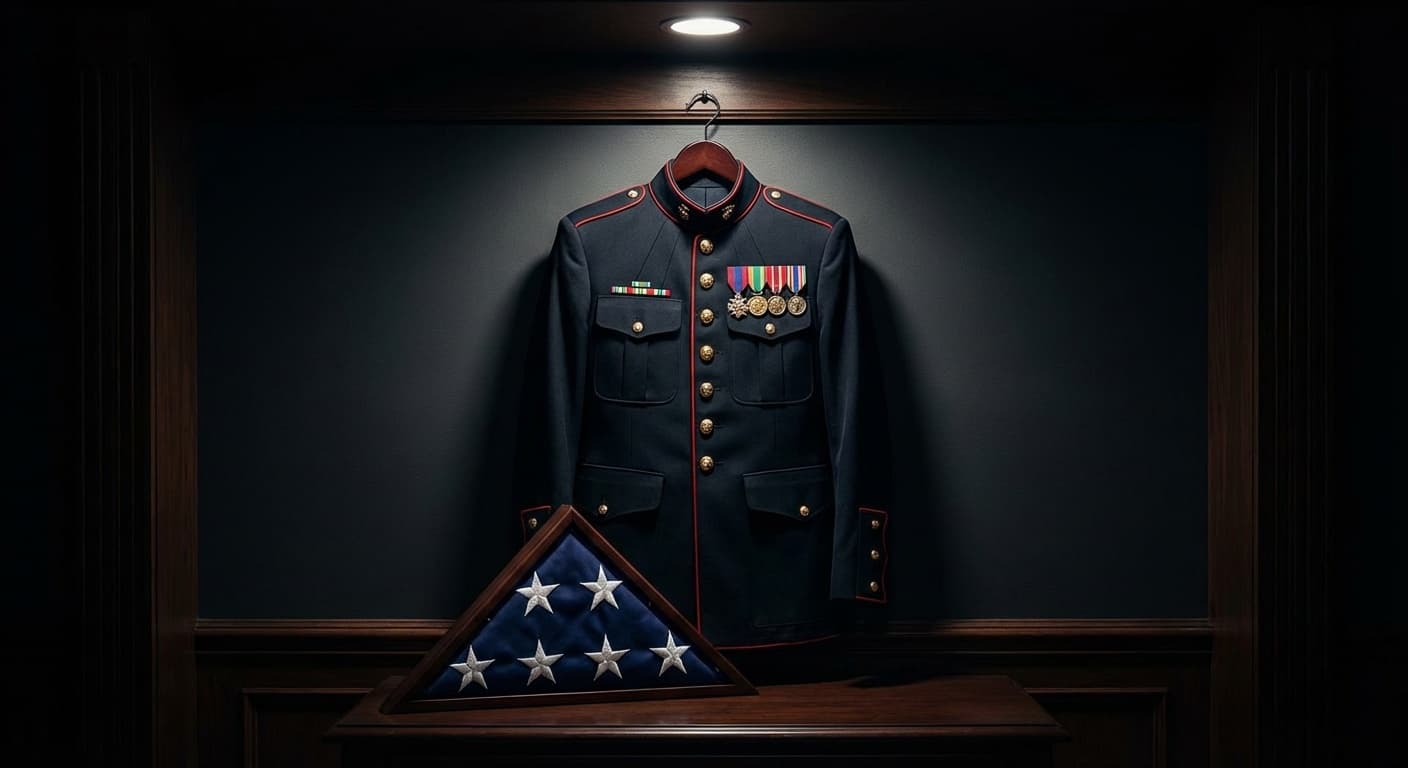
Administrative Separation Defense for Marines (ADSEP)
When the administrative separation paperwork arrives, most servicemembers do not know the full weight of what they are reading. Your rights are broader than the chain of command typically explains. The characterization you leave with, Honorable, General Under Honorable Conditions, or Other Than Honorable, stays on your DD-214 and controls VA healthcare, the GI Bill, home loan guaranty, federal employment preference, and disability compensation. If you received a notification of separation, the 15-minute call is free.
Free 15-Min CallAdministrative Separation Defense
Administrative Separation Defense
Servicemembers facing involuntary separation have more options than the chain of command typically explains. Know them before agreeing to anything.
Your characterization of service follows you into VA benefits, civilian employment, federal job applications, and security clearance adjudication. An OTH discharge can leave a permanent mark on your record and have lasting effects on your career in and out of the military.

Administrative separation is not a criminal case, but the discharge characterization it produces can shape your benefits, your future employment, and your security clearance for years. The board is where that characterization gets decided, and a Marine who walks in with prepared witnesses and documentation is in a very different position than one who shows up to explain. What happens in front of that board can matter as much as the underlying allegation.Matthew Thomas, former Marine Judge Advocate and USMC Defense Counsel of the Year (Regional & National), 2021, certified under Article 27(b), UCMJ
Matthew reviews every separation package for procedural errors, missing documentation, and factual inaccuracies, then builds the case for retention or the best available characterization.
The immediate fear after the paperwork arrives is losing your job. The longer-term consequence is your characterization of service, the three words on your DD-214 that decide VA healthcare eligibility, the GI Bill, home loan guaranty, disability compensation, and federal employment preference. An Other Than Honorable discharge can cut off access to most of those benefits. A General Under Honorable Conditions discharge preserves some but not all. An Honorable discharge protects them. The difference is worth fighting for at the board, not afterward through the military discharge upgrade process.

The Marine Corps issues Other Than Honorable (OTH) discharges more frequently than any other branch. Marines facing administrative separation should treat the risk of OTH characterization as elevated and engage defense counsel before signing any election form.
Your chain of command initiates the separation. They build the package. They recommend the characterization. They are not the final decision-maker, and their recommendation is not the outcome. If you have board rights, typically triggered by six or more years of total service, or eight years for the Coast Guard, or when the command seeks an OTH regardless of years, you have the right to appear before a board, present your case, call witnesses, and argue for retention or a better characterization. Many servicemembers waive the board because nobody walked them through what it actually does.
You also have the right to remain silent at the hearing. The board cannot draw an adverse inference from your decision not to testify. In many cases, remaining silent is the strongest strategic position, particularly when the government's evidence is thin, when cross-examination would create risk, or when the defense is best made through the service record and witnesses rather than through the servicemember's own testimony. That call depends on the facts and the posture of the case and should be made with counsel.
Matthew has represented servicemembers at administrative separation boards at Camp Lejeune and installations across the country. He reviews every package for procedural errors, factual inaccuracies, and missing documentation. He identifies the strongest arguments for retention or for the best available characterization. And he handles direct testimony preparation when the decision to testify is the right one.
If you just received separation paperwork, do not sign anything. Do not waive your board rights. Do not agree to anything your command suggests until you have talked to an attorney who handles these proceedings. The 15-minute call is free if you received a notification of separation.
What You Need to Know
Read this before you do anything.
01
Administrative separation is not the end of the fight
An OTH or General discharge can cut off access to VA healthcare, education benefits, and other veterans' programs. The best opportunity to fight for a better characterization is at the administrative separation board, not through the discharge upgrade process years later when the record is already set.
02
The Marine Corps issues OTH discharges more often than any other branch
Out of all the service branches, the Marine Corps issues Other Than Honorable discharges at the highest rate. Marines facing administrative separation should assume OTH exposure is elevated and engage counsel before signing any election form.
03
You have the right to a board hearing in many cases
Under DODI 1332.14, six or more years of total active and reserve service typically triggers board rights, or eight years in the Coast Guard. If the command is seeking an OTH, you are entitled to a board regardless of years of service. A board is a significantly stronger forum than a paper-only proceeding: you can present evidence, call witnesses, and contest the underlying basis.
04
You have the right to remain silent at the hearing
The client has the right not to testify at the separation board. The board cannot hold that decision against the servicemember. In many cases, remaining silent is the right strategy, particularly when cross-examination would create risk or when the defense is stronger through the record and witnesses. That call is made with counsel based on the posture of the case.
05
Written rebuttals matter when there is no board
If you do not have board rights, you still have the right to submit a written rebuttal to the separation recommendation. That rebuttal becomes the record the separation authority reviews. A well-built rebuttal can change the outcome.
06
NJP is often the gateway to separation
NJP (Office Hours in the Marine Corps, Captain's Mast in the Navy) is frequently the event that triggers the separation action. The NJP finding does not decide the discharge characterization. The separation proceeding does.
07
Procedural errors in the package can change the outcome
Separation packages are built by commands, and commands make mistakes. Missing documents, incorrect legal references, procedural defects in the notification process, and factual inaccuracies in the underlying allegations create openings to challenge the separation or the recommended characterization.
08
An Honorable discharge is possible even in misconduct cases
Characterization is not locked to the basis for separation. An Honorable characterization can be available in misconduct-based separations when the overall record supports it: length of service, prior performance evaluations, deployments, awards, and the nature of the misconduct all factor in.

How It Works
The process, step by step.
Separation paperwork arrives
The package your chain of command builds becomes the record. Matthew reviews it immediately for procedural errors, factual inaccuracies, and missing documentation. Catching these early changes the defense strategy and sometimes the outcome before a board ever convenes.
Determine board rights and strategy
Whether you have board rights depends on years of service and the basis for separation. At Camp Lejeune and across USMC installations, six or more years of service typically triggers board eligibility. Electing a board is almost always the right call.
Build the service record narrative
Your service record tells a story. Deployments, performance evaluations, awards, letters of commendation, and the context of any prior discipline all factor into the characterization argument. Matthew builds the complete picture of your service.
Board preparation
Matthew builds the case: service record review, character witnesses, commander statements, and rebuttal evidence. Board panels are three senior service members. They hear testimony. The difference between a prepared appearance and an unprepared one is visible across the table.
The separation board hearing
You testify. Witnesses appear. Matthew examines witnesses and argues your case for retention or for the best available characterization. The board recommends to the separation authority: retain or separate, and if separate, with what characterization.
Separation authority decision
The separation authority reviews the board recommendation and makes the final call on separation and characterization. Matthew monitors the record through this stage and advises on any post-board options if the outcome warrants it.
Common Questions
Frequently Asked Questions
Have a question not covered here? The free 15-minute triage call is the fastest way to get a direct answer.
Other Than Honorable (OTH) is the most common adverse characterization at administrative separation. It is not a punitive discharge, but it can disqualify you from most VA benefits and it shows up in background checks and employment records. Fighting for a better characterization at the board is far less expensive than petitioning for an upgrade years later.
No. You have the right to remain silent at the hearing. The board cannot draw an adverse inference from your decision not to testify. In many cases, remaining silent is the strongest strategy, particularly when cross-examination would create risk. The call is made with counsel based on the facts.
Under DODI 1332.14, six or more years of total service typically triggers board rights (eight years in the Coast Guard). If the command seeks an OTH characterization, you are entitled to a board regardless of years of service. Many servicemembers waive the board because nobody explained that they had the right.
Misconduct is the most common basis, including drug offenses (positive urinalysis under Article 112a), pattern of misconduct, and commission of a serious offense. Other bases include unsatisfactory performance, alcohol rehabilitation failure, civilian arrests and convictions, and physical fitness or body composition failures.
Yes. The Marine Corps issues Other Than Honorable discharges more frequently than any other branch. Marines facing administrative separation should assume their OTH exposure is elevated and engage counsel early.
In misconduct cases, the ADSEP process begins with written notification outlining the basis for separation and the least favorable characterization being considered. The service member is advised of their rights, including the opportunity to consult with counsel and, in certain cases, request a board -- some bases trigger board rights regardless of time in service. The service member may submit a written rebuttal or appear before a board, where evidence is presented and witnesses may testify. The board then determines whether the misconduct occurred and recommends retention or separation, along with a characterization of service. The separation authority reviews the record and makes the final decision. The process typically runs 30 to 90 days.
Yes. Violation of a Marine Corps PAC Order (MCO 5354.1) or similar command-issued conduct orders is treated as misconduct and can support administrative separation. These cases frequently arrive alongside NJP.
In some circumstances, yes. Characterization is not locked to the basis for separation. An Honorable characterization can be available in misconduct-based separations when the overall record supports it. Length of service, prior evaluations, deployments, awards, and the nature of the misconduct all factor in.

Two Ways to Start
Your case deserves focused representation.
Matthew offers a free 15-minute call when you have an SOR, SIR, military charge sheet, or notification of separation. You explain the situation. He tells you whether it's a case he handles, what it involves, and what representation costs. No pitch.
All other matters · Paid